// Speaking

Talks about the systems underneath media.

Keynotes, fireside chats, and executive briefings on what changes when AI becomes part of media infrastructure: rights, provenance, production memory, and the control layer.

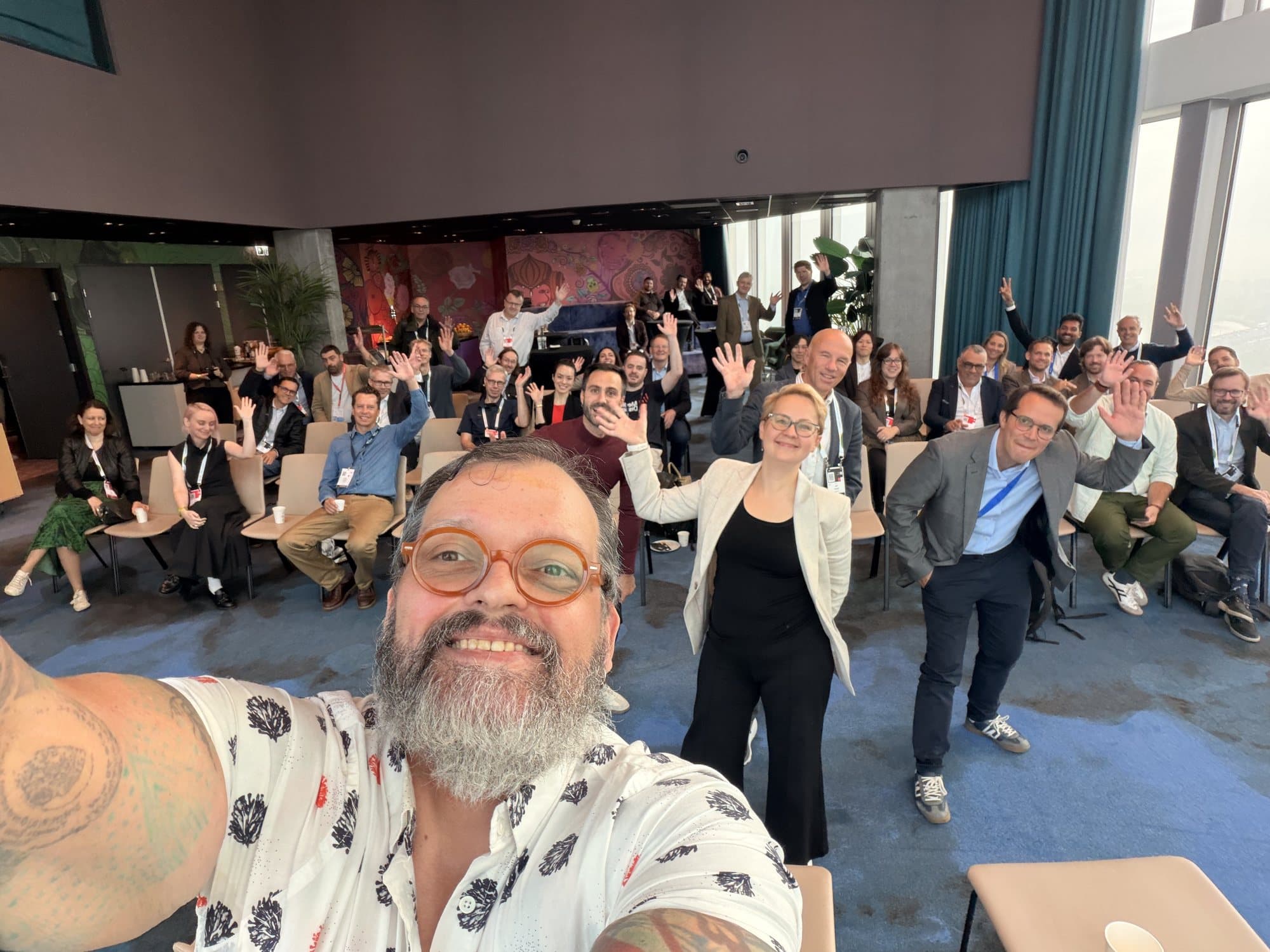
Andy Beach taking a selfie at the front of a conference room, the audience waving behind him

Three talks I give now, and one I give on request. Each one is built from the published essays, so the argument is already in public and you can read it before you book it.

Video as a Data Type: A Reference Architecture for AI-Era Media

The tools are the weather. Don’t build your strategy on the weather.

Video is becoming a data type: something you can address, query, permission, settle, and attribute. This talk walks the reference architecture behind that claim. Media work does three things, makes the thing, moves the thing, and establishes what it means, and the seam between the workflow and the substrate underneath it is where value either churns or accumulates. Six layers carry the durable value: rights and policy, context and asset memory, usage and settlement, routing and distribution, transport, and representation. The talk ends with what to buy, what to build, and what to stop defending.

Keynote · 25–45 min · Debuted at Silicon Valley Video Summer Camp, July 2026

Read the Reference Architecture →

Human-Enhanced Is the New Automation

The question is not whether people stay in the loop. It is which loop.

Every automation story in media is quietly a story about where the humans moved. This talk follows The Human Layer series: how identity becomes infrastructure, why observability turns into the default contract between people and pipelines, and what “human-enhanced” actually requires once the model is doing the first draft of everything. Built for operators who have to staff, budget, and defend a production that is half machine.

Keynote or fireside · 30–45 min

Read the essay →

The Model Is a Supplier

You would never sign a vendor contract you can’t audit. You just did.

Foundation models are suppliers, and the supplier has suppliers of its own. This talk reframes AI adoption as a procurement and controls problem: what you are actually buying, where the capability you pay for diverges from the capability you can keep, and the five controls that separate a dependency you manage from one that manages you. Practical, slightly uncomfortable, and designed for executive teams and boards.

Executive briefing or keynote · 30–60 min

Read the essay →

By request

What the Record Teaches

Having a history and being governed by it are two different conditions.

Canon, precedence, and the new work of deciding what counts, for story worlds, archives, and the training corpora built from them. A talk for studios, libraries, and anyone whose business is a record.

Keynote · 30 min

Read the essay →

Also in the room HPA Tech Retreat, NBA Tech Summit, BuffConf, SMPTE (AI training programs and the Future Frames podcast partnership).

Full list, references, and video on request.

  • Keynote (25–45 min)
  • Fireside or panel (moderating or seated)
  • Executive briefing (60–90 min, closed room)
  • Half-day working session (reference architecture applied to your stack)
  • Virtual versions of all of the above

Audiences

Industry conferences, studio and broadcaster leadership, universities, investor and portfolio days.

Fees

Fees on request. Universities, standards bodies, and non-profits: ask, the answer is usually yes.

Travel

Based in Portland, Oregon. Travels from PDX.

Ask the essays. The answers come from the published Engines of Change archive, so what you get is what the room will get.

Try

Answers come only from Andy's published Engines of Change essays. They can be wrong; follow the sources.

Subscribe to Engines of Change →

Everything an organizer needs, in one place. Copy what you need; no sign-up.

One-line intro

Andy Beach is a media technologist and AI strategist, the former CTO for Media & Entertainment at Microsoft, and the author of Engines of Change.

Bio · 50 words

Andy Beach is a media technologist and AI strategist. He was CTO for Media & Entertainment at Microsoft and now runs Alchemy Creations, writes Engines of Change, and hosts the Future Frames podcast. He chaired Streaming Media 2025 and speaks on how AI is rewiring media infrastructure, rights, and production.

Bio · 100 words

Andy Beach is a media technologist and AI strategist working at the intersection of media infrastructure, technology, and story. He was CTO for Media & Entertainment at Microsoft, where he worked with studios, broadcasters, and streaming platforms on cloud production and distribution. Today he runs Alchemy Creations, writes Engines of Change, a weekly analysis of what AI changes underneath media, and hosts the Future Frames podcast. He advises companies including V-Nova and Modtech Labs, chaired Streaming Media 2025, and is the author of a reference architecture for AI-era media that treats video as a data type.

Bio · 200 words

Andy Beach is a media technologist and AI strategist who has spent his career on the systems underneath media: streaming, cloud production, archives, and now the infrastructure that AI is quietly rebuilding. As CTO for Media & Entertainment at Microsoft, he worked with studios, broadcasters, leagues, and streaming platforms on how content gets made, moved, and monetized at scale. He left to think and build in the open.

He runs Alchemy Creations, an advisory and build practice, and writes Engines of Change, a weekly publication read by operators, founders, and technologists across the industry. Its long-form Deep Cuts have become a running argument about the control layer: who holds the rights, the provenance, the production memory, and the authority to decide what counts when machines are doing the first draft of everything. He hosts the Future Frames podcast, chaired Streaming Media 2025, and has keynoted at NAB, Chapman University, DePaul’s AI in the Arts Symposium, and the Silicon Valley Video Summer Camp, where his reference architecture, Video as a Data Type, went public.

He advises V-Nova, Modtech Labs, Slink It, and FlikForge, works with SMPTE on AI education, and ends every essay with a cocktail. He lives in Portland, Oregon.